There is no single “best” inflatable for every venue. I learned that the hard way. When I first started managing equipment purchases for a family entertainment center, I assumed the biggest unit with the most slides was always the right call. Four years later—after one under-used water park and one surprisingly busy bounce house—I can tell you the right answer depends on your space, your seasons, your crowd, and your tolerance for maintenance. My role involves purchasing and vendor management, handling roughly $150,000 in annual orders across six suppliers, so these decisions directly affect my budget and my internal reputation.
This guide is built around three common scenarios. You’ll probably recognize one of them. If not, the last section will help you figure out where you land.
Start With the Two Units That Fit Most Venues
Before we get into scenarios, let’s be clear about what we’re comparing. The Blast Zone Hydro Rush inflatable water park is a commercial-grade water playground—slides, splash pads, climbing elements, and enough water volume to make it a destination. The Blast Zone Play Palace bounce house is a large, themed inflatable play space designed for dry bouncing, crawling, and imaginative play. Both are built for repeated commercial use, but they answer different questions.
As of January 2025, I’ve seen both installed in venues ranging from 2,000-square-foot event spaces to 10-acre amusement lots. The ones that succeed are not always the ones with the best marketing photos. They’re the ones matched to the venue’s operating reality.
Scenario A: You’re a Seasonal Outdoor Venue in a Warm Climate
If your facility is outdoors and open from May through September, the Hydro Rush is probably your best bet. Water attractions pull in birthday parties and summer foot traffic in a way dry bounce houses can’t. Kids will wait in line for a water slide in a way they won’t for a bounce house—especially when it’s 90 degrees outside.
But there are conditions. You need:
- Reliable water access and drainage
- Staff who can monitor the water park during operating hours
- A solid plan for daily cleaning and overnight drying
- Space for a safe clearance zone around the unit
The most frustrating part of comparing quotes: the same line item can be called four different things. You’d think “commercial-grade blower” means the same to every vendor, but it doesn’t. On the purchasing side, I’ve learned to ask what’s NOT included? before what’s the price? A quote that seems lower than the competition might not include the water testing kit, the commercial blower, the extra anchor set, or the shipping fee. The vendor who lists all fees upfront—even if the total looks higher—usually costs less in the end.
In 2023, a vendor quoted me a price that was $3,000 below the next bid. I was ready to sign. Then I asked about delivery and setup. The price didn’t include liftgate delivery, setup crew, or the tie-down weights required by local code. Add those in, and the “cheap” quote was $1,750 more than the transparent one. I’ve never forgotten that.
One more thing: safety standards matter. I look for units that meet ASTM F2376 for inflatable play devices and follow current CPSC anchoring guidance. If a vendor can’t show those, that’s a red flag.
Scenario B: You’re an Event Rental or Indoor Play Business
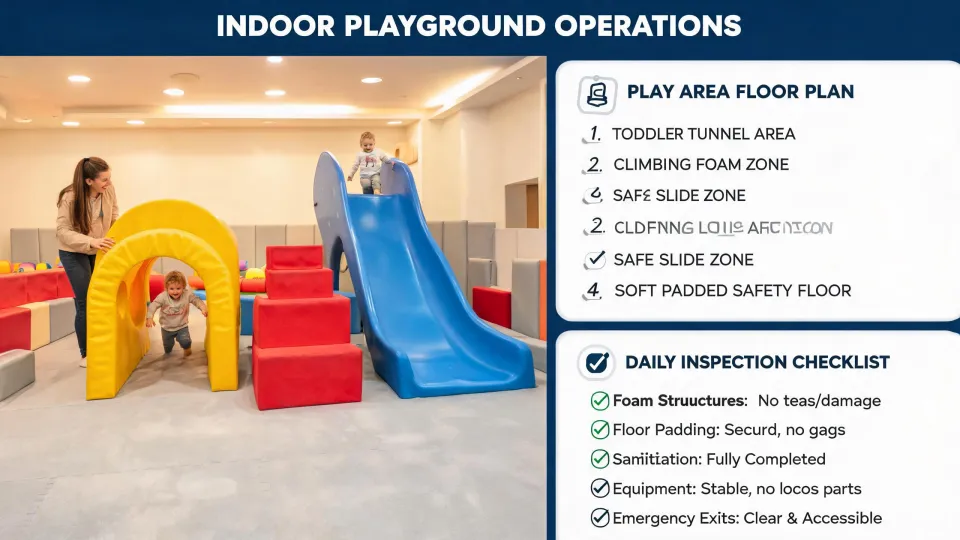
The Play Palace makes more sense if you’re renting to private events, running an indoor play area, or doing lots of corporate parties. Because it’s not water-dependent, you can set it up in a gym, a hall, or a park without worrying about splash zones or puddles. It’s also easier to rotate between locations—which matters when you’re an event rental business with six clients in one weekend.
The Blast Zone Play Palace bounce house has another advantage: it doesn’t depend on hot weather. In March or October, families still want a place for kids to burn energy. A water park sits unused when it’s 60 degrees; a bounce house doesn’t.
One thing I see in rental purchasing: people get tempted by licensed themes. You might think an Uncharted video game theme would be a huge draw, and it would be—for a while. But licensing is complicated, and trends fade. A blast-zone adventure theme gives you the same “exciting destination” feeling without the legal headache or the risk of your equipment looking dated in two years. If you’re trying to make a unit feel like an action game, think about the layout and the obstacles, not the intellectual property.
The same logic applies to features. A video game controller is a familiar symbol of fun, but in an inflatable, what matters is how kids actually move through the space. Look for slides, crawl tubes, ball pits, and basketball hoops—things that create replay value. A themed graphic on the side doesn’t extend a rental’s lifespan.
Scenario C: You Have a Tight Budget or a Tight Footprint
Here’s where my opinion might surprise you. If your space is under 40 by 40 feet, or your budget is under five figures, I’d lean toward the Play Palace—even if you’re in a warm climate. Most buyers assume a water park is the bigger money-maker. But a water park requires more space, more water, more staff, and more prep time. A bounce house can deliver comparable revenue per square foot with a fraction of the setup headache.
I’m not saying the Hydro Rush is overrated. I’m saying it needs certain conditions to shine. If those conditions aren’t met, a high-volume bounce house is often the better investment. You can also run it indoors on rainy days, which extends your sellable days beyond the summer season.
In our 2024 vendor consolidation project, we swapped out one under-performing water unit for a Play Palace and cut our setup labor by almost half. That was the moment I stopped looking at “biggest equipment” and started looking at “best use of resources.”
How to Tell Which Scenario You’re In
Still on the fence? Run through these three questions:
- How many operating months? If you’re open five or more months in warm weather, water becomes viable. If fewer, a bounce house gives you more usable days.
- Who’s your primary customer? Water parks attract older kids and big birthday groups. The Play Palace is stronger for ages 2–8 and for mixed indoor/outdoor events.
- What’s your staffing capacity? Water features need constant supervision and cleaning. A bounce house still needs monitoring, but it’s less intense.
A quick note on presenting this internally: when I build a purchase proposal, I put the floor plan and cash flow on a vertical slide. If you’re not sure how, search phrase: “how to make google slide vertical” and you’ll see the setup option. It takes about 30 seconds, and it makes a tall inflatable design look far less awkward on screen. That’s one of those small process wins that makes a purchasing recommendation easier to approve.
Bottom Line
The Blast Zone Hydro Rush inflatable water park and Blast Zone Play Palace bounce house are both quality commercial units. The right one is the one that fits your venue’s season, space, and staff. For warm-weather outdoor venues with room to spare, the Hydro Rush can be a game-changer. For flexible, year-round operation, the Play Palace is a safer bet.
And no matter which you choose, get the full cost picture before you commit. A transparent quote beats a low quote with surprises. That’s the bottom line.