There's no single "best" inflatable for every business. If someone tells you that a specific model is the only one worth buying, they're probably not the right supplier for you.
I'm a quality and compliance manager in the commercial inflatable industry. I review every unit before it reaches customers—roughly 200 unique units per year. Maybe 180 to 220, I'd have to check the exact log. I've rejected about 4% of first deliveries in 2024 due to stitching defects, wrong fabric colors, or anchor straps that didn't match the approved sample. Over four years, I've learned that the product you need depends on the scenario you're in, not on a top-ten list.
This guide walks through three common scenarios. It's a decision tree, not a single recommendation. Whether you're looking at a Blast Zone Magic Castle bounce house, planning to enforce slide on shoes at a water slide, or trying to cover both active play and quieter activities at an event, the framework is the same.
Scenario A: High-traffic indoor venue
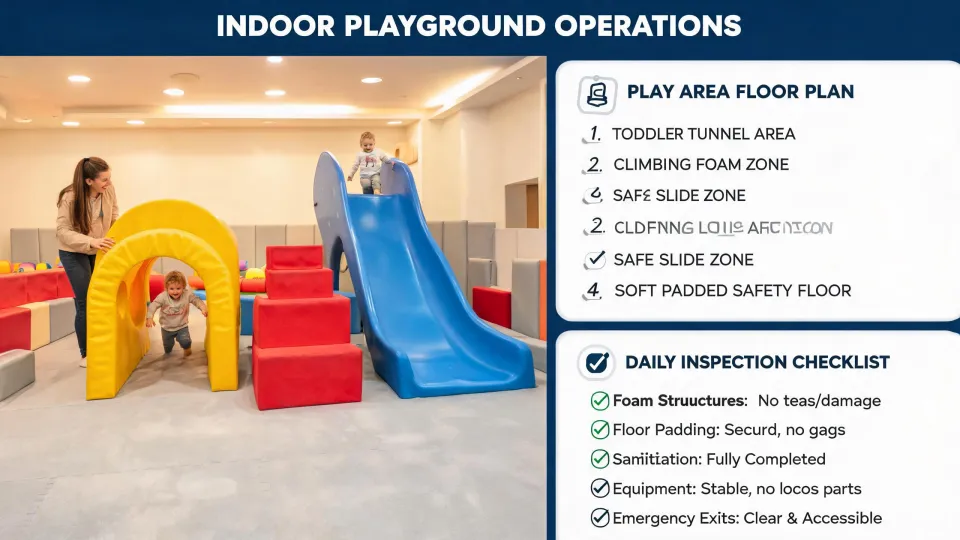
This is the most common purchase we see from B2B buyers. Amusement centers, indoor playgrounds, trampoline parks, and rental companies all fall into this bucket.
For this scenario, a commercial-grade Blast Zone Magic Castle bounce house is a strong fit. The Magic Castle series is built for continuous use, not occasional weekend parties. The vinyl is heavier, the stitching is reinforced, and the safety netting is designed to hold up to repeated entry and exit.
Here's what I check before approving a unit:
- Fabric weight. Commercial vinyl should be heavier than residential material. If the spec sheet doesn't list it, ask for a sample swatch and weigh it yourself.
- Stitching. Double-stitched seams, no exposed threads, no skipped stitches near stress points. In Q1 2024, we rejected a batch because the seam tolerance was off by about 18 millimeters. The vendor said it was "within industry standard." We said it wasn't within ours.
- Anchor system. Ground stakes work for grass, but indoor venues usually need sandbags or weighted plates. A weak anchor system will cause more than safety problems—it causes premature wear on the fabric.
- Blower sizing. An undersized blower makes the inflatable feel soft and slows down rotation times. Get the blower spec in writing, not just "included."
I should add that "commercial grade" isn't a regulated term. That's something vendors won't tell you. It's a marketing label. The only way to know what you're getting is to verify the materials and test reports yourself.
Scenario B: Outdoor water operation
Water changes everything. You can't just put a dry bounce house outside with a hose. You need a unit with water-resistant material, proper drainage, and UV protection.
One of the most overlooked operational details is footwear. I recommend enforcing slide on shoes—water shoes or aqua socks—for everyone using the slide. Bare feet carry oils and dirt that break down vinyl faster. Plus, wet deck surfaces are a slip risk, and "yes, we had a slip-and-fall insurance policy" is not a great business plan.
A park operator in Arizona, not far from Slide Rock Sedona, learned this the hard way. They initially bought a bargain water slide and let guests go barefoot. The slide deck was worn down after one season. On the replacement, they made slide on shoes mandatory, added a foot rinse station, and chose a commercial-grade unit from our Blast Zone lineup. That replacement slide is still running in its third season.
So if water is in your plan, budget for the slide on shoes, the cleaning station, and the maintenance time. The inflatable itself is only part of the total cost.
Scenario C: Themed event or hard deadline
This is where the blast-zone brand name makes the most sense. A themed inflatable isn't just a rental; it's the centerpiece of an event.
Suppose you're organizing a community event. You've got active kids who need to burn energy, and you've also got a table where a staff member is teaching a few kids how to play One Piece card game. Both activities can coexist. The bounce house handles the physical side; the card table handles the quiet side. A themed castle gives the event a visual anchor and keeps parents in the area longer.
The bigger issue in this scenario is the deadline. Event dates don't move. When a supplier says "probably by Thursday" or "we'll try to ship it on time," that's not a deliverable. In March 2024, we paid $400 extra for guaranteed rush delivery on a custom unit. The cheaper quote was $150 less, but it came with "estimated" delivery. The event was worth $15,000 to us. That extra $400 wasn't for speed—it was for certainty.
I didn't always think this way. The vendor failure in March 2023 changed how I think about backup planning. One critical deadline missed, and suddenly "guaranteed" became a line item in our budget.
How to tell which scenario you're in
Still not sure? Answer these four questions:
- How many children will use it per hour? More than 20 to 30 per hour means you're in commercial territory, not residential.
- Is water involved? If yes, skip the dry castle and go straight to a water slide or combo unit.
- Is there a hard date? Grand openings, event bookings, and festival schedules mean delivery certainty matters as much as product quality.
- What's the long-term plan? A seasonal rental company has different needs than a year-round family entertainment center.
If you're still torn, map your must-haves against your venue's physical constraints. No water hookup? Scenario B is out. No indoor space? Scenario A needs a wind and weather plan. Hosting mostly private parties? Scenario C's theme might be what makes you memorable.
The bottom line: pay for certainty, not promises
The most expensive inflatable you can buy is the one that arrives late or fails during a busy Saturday. I've seen the cost of vague promises: a $22,000 redo, a delayed launch, and an 8,000-unit quality mess that happened on someone else's watch.
When I implemented our verification protocol in 2022, first-article failures dropped by 34%. We didn't switch to higher-priced suppliers or add weeks to our lead time. We just wrote down the specifications, checked every unit against them, and stopped accepting "should be fine" as an answer.
So whether you're choosing a Blast Zone Magic Castle bounce house, a water slide with slide on shoes, or a custom themed unit, demand specifics. Get the delivery date in writing. Get the material spec in writing. Get the warranty language in writing.
If a supplier gives you clear answers, that's a good sign. If they don't, that's your answer too.